What Breed Is My Black Cat? Black Cat Breeds Explained
Updated July 31, 2026 · By Abdeljalil Bouchfar
Black is the hardest coat to identify a cat by, because it erases the most informative feature: the pattern. With stripes and points hidden, you are left reading structure: face shape, ears, body, and coat texture.
First the honest base rate: most black cats are domestic shorthairs, not a breed. But black appears in over twenty recognized breeds, and the structural tells still work. Here is how to read them.
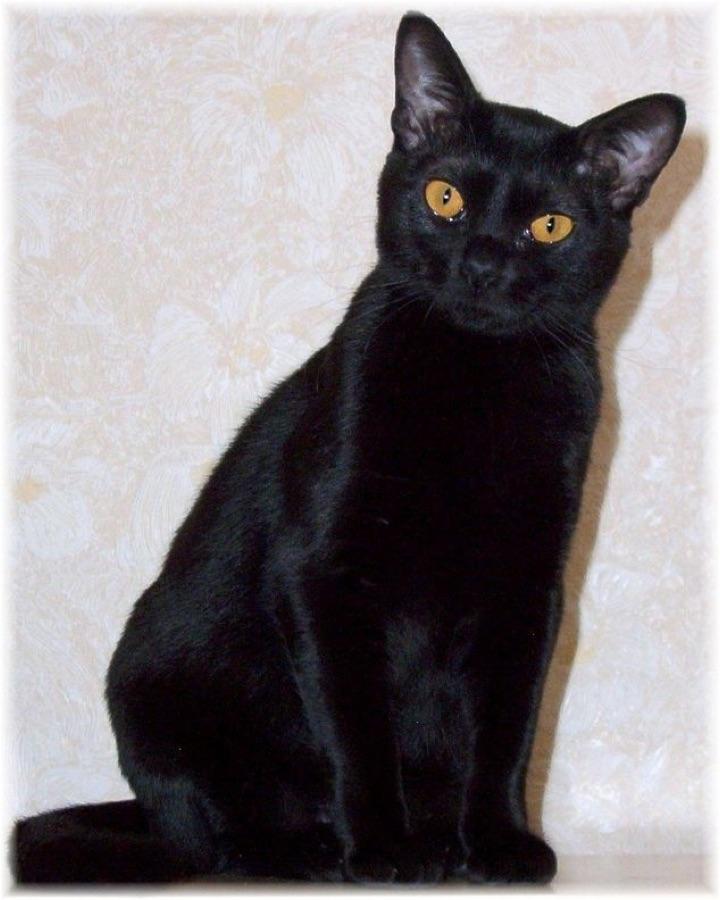
The one truly black breed: Bombay
The Bombay was bred specifically to look like a miniature panther: jet black to the roots, even black paw pads and nose, copper-to-gold eyes, a rounded face, and a glossy, patent-leather coat. If your cat has all of that, plus a compact, muscular body, Bombay resemblance is real. Note the eyes: green eyes point away from Bombay, toward the general black domestic cat.
Breeds that commonly come in black
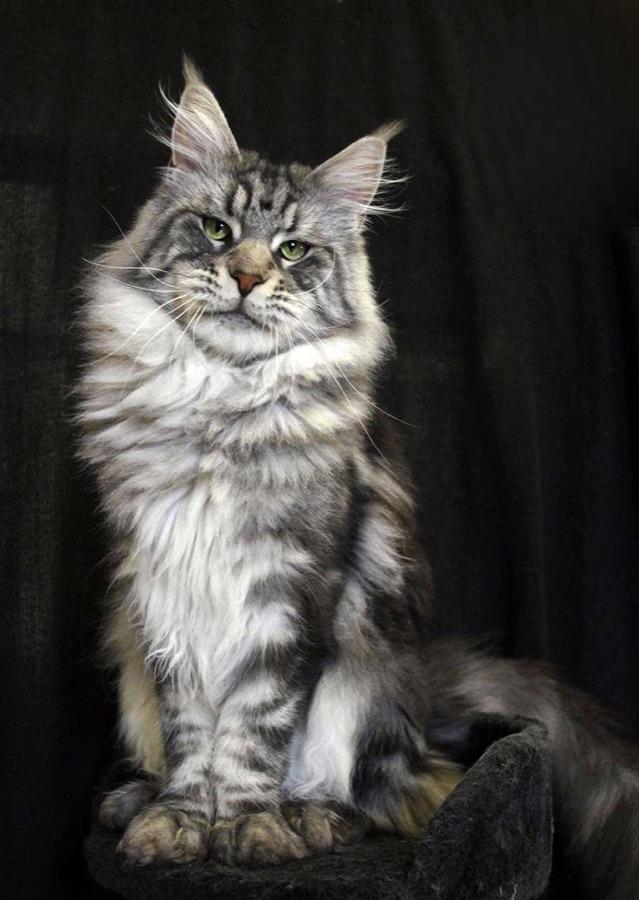
- Black Maine Coon: the size, shaggy uneven coat, ear tufts, and square muzzle survive the color
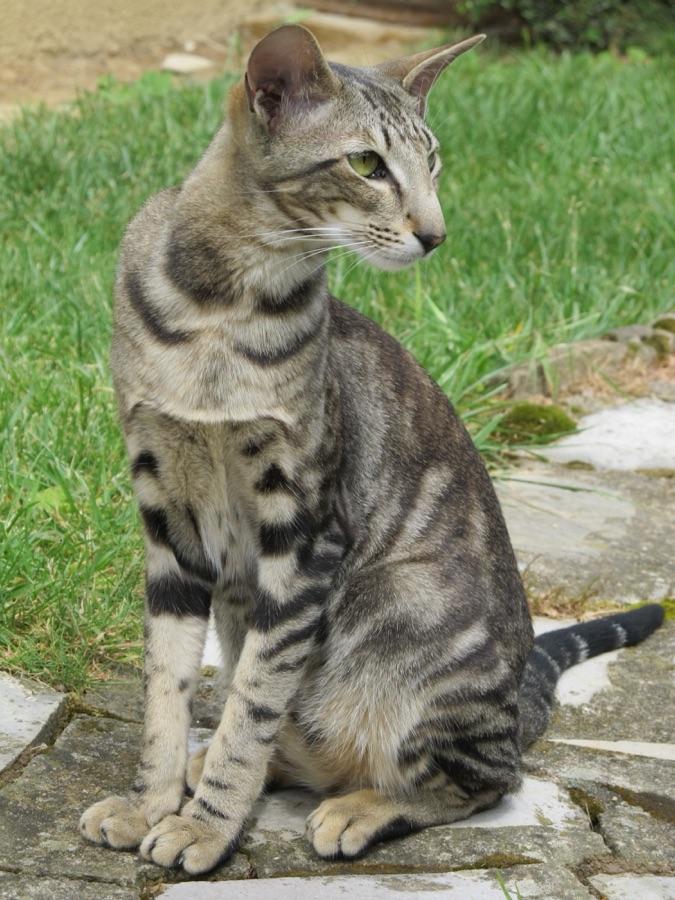
- Black Oriental Shorthair: the wedge face and oversized ears are unmistakable in any color
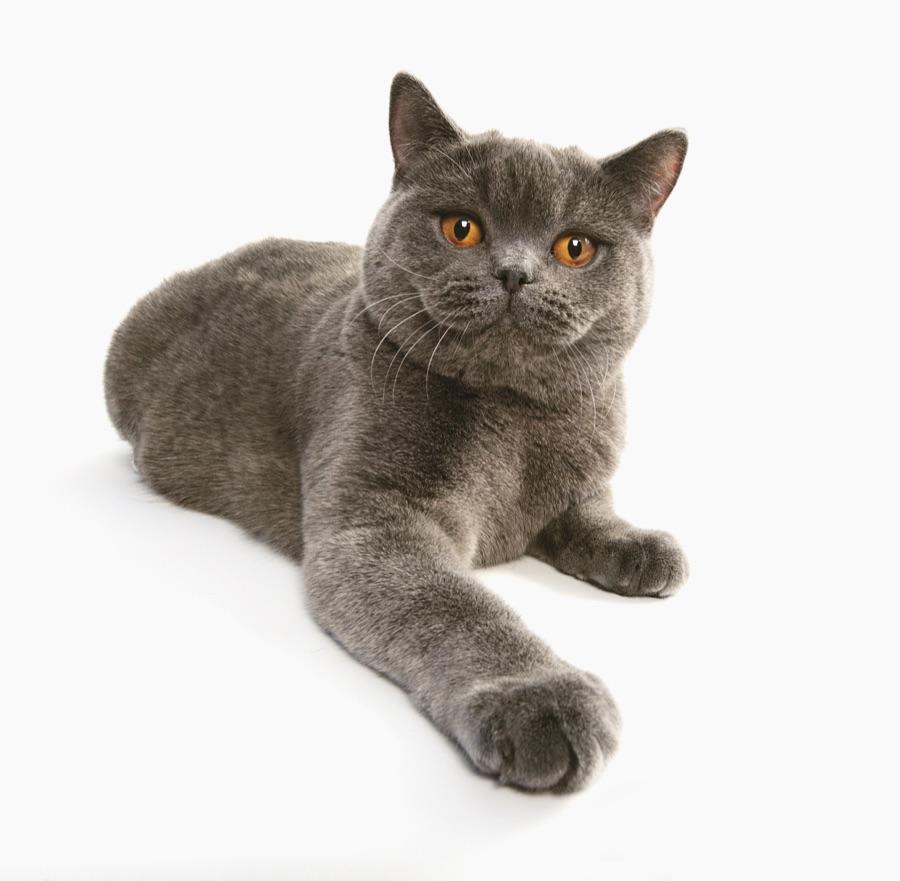
- Black British Shorthair: round face, dense plush double coat, sturdy cobby body
- Black Norwegian Forest and Siberian: big, long-coated forest cats with triangular or rounded faces
- Black Persian: the flat face makes color irrelevant to identification
The ghost stripes and the rust
Two charming black-cat quirks help identification. Many black cats are genetically tabby with the pattern suppressed; in bright sunlight you can see ghost stripes, which tells you the cat carries tabby genetics, typical of domestic cats. And black coats can "rust" reddish-brown in strong sun or with age; rusting is normal and not a sign of mixed breed.
Reading structure when color says nothing
Work the checklist that survives any coat color: face shape (round, wedge, square muzzle), ear size and set, eye color, body type (cobby, tubular, massive), coat length and texture (plush, silky, shaggy). A photo identification does exactly this comparison across every breed at once, which is particularly useful on black cats, where the eye has so little pattern to anchor on. Shoot in good light, slightly angled, so the profile and coat texture are visible; straight-on flash photos of black cats become silhouettes.

Identify your black cat with Felinia
- Scan your cat in daylight, face-on and in profile; avoid flash.
- Read the top matches: Bombay-type, a black variant of a breed, or domestic shorthair.
- Compare the "spot it by" features: eye color, face shape, coat texture.
- Ask the chat about the match; black cats deserve better than the superstition they get.
About the author
Abdeljalil Bouchfar is an independent software engineer and the developer of Felinia: Cat Identifier & Care. He is not a veterinarian, doctor, or lawyer.