Seed Identifier: Sow & Track · Reference
Seed Identifier: Snap a Seed, Know What to Sow and How
Found an unlabelled packet or a mystery seed? Photograph it and get the species, sowing depth, germination time, and safety warnings, then track your sowings until they sprout.
- Species ID with botanical name, family, and genus
- Sowing depth, spacing, season, and pre-treatment
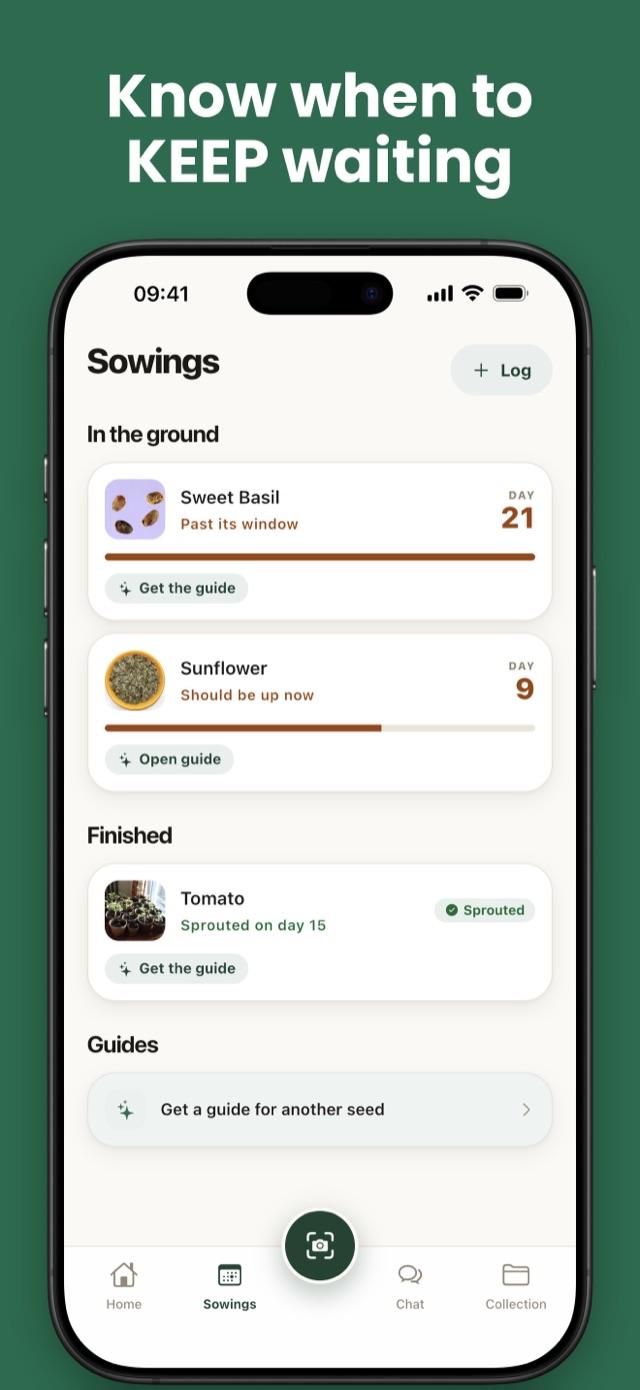
- Sowing tracker with expected germination dates
Version 1.0 · Updated Aug 31, 2026
How it works
- 1
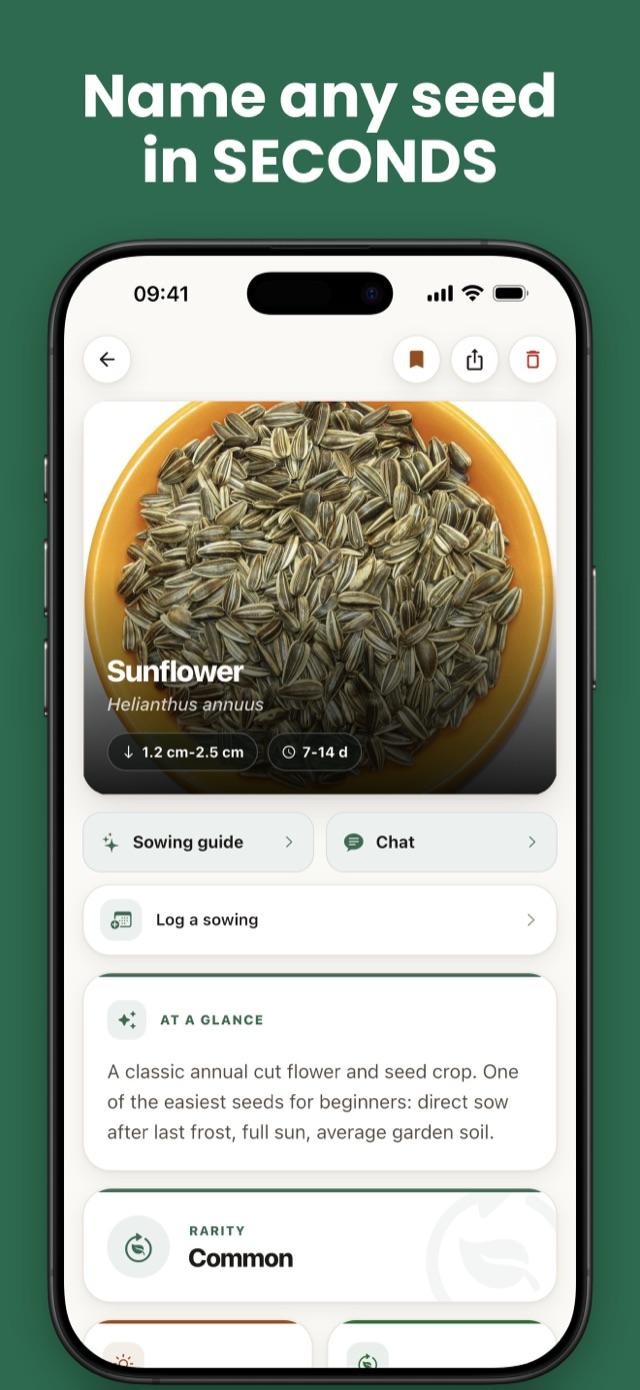
Snap the seed
Photograph the seed on a plain background in good light. A few seeds together help the AI read size and texture.
- 2
Get the full profile
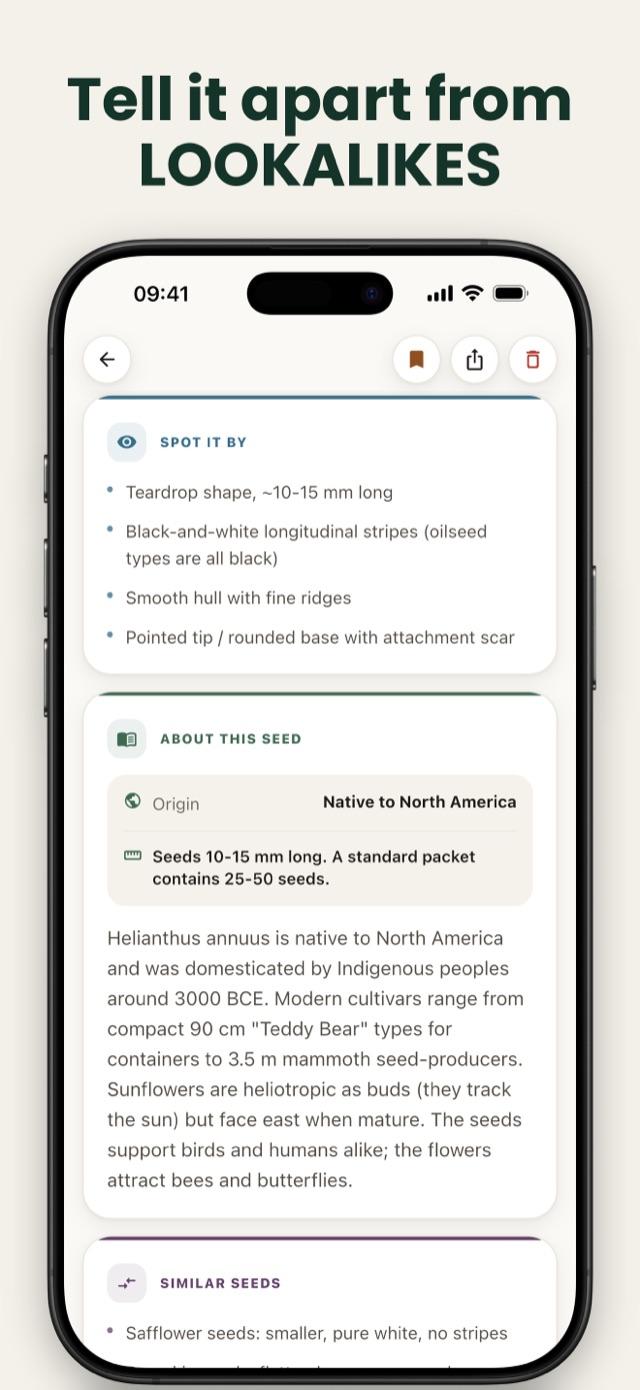
Common and botanical name, family, and genus, plus lifecycle, sunlight and water needs, hardiness zones, and days to harvest.
- 3
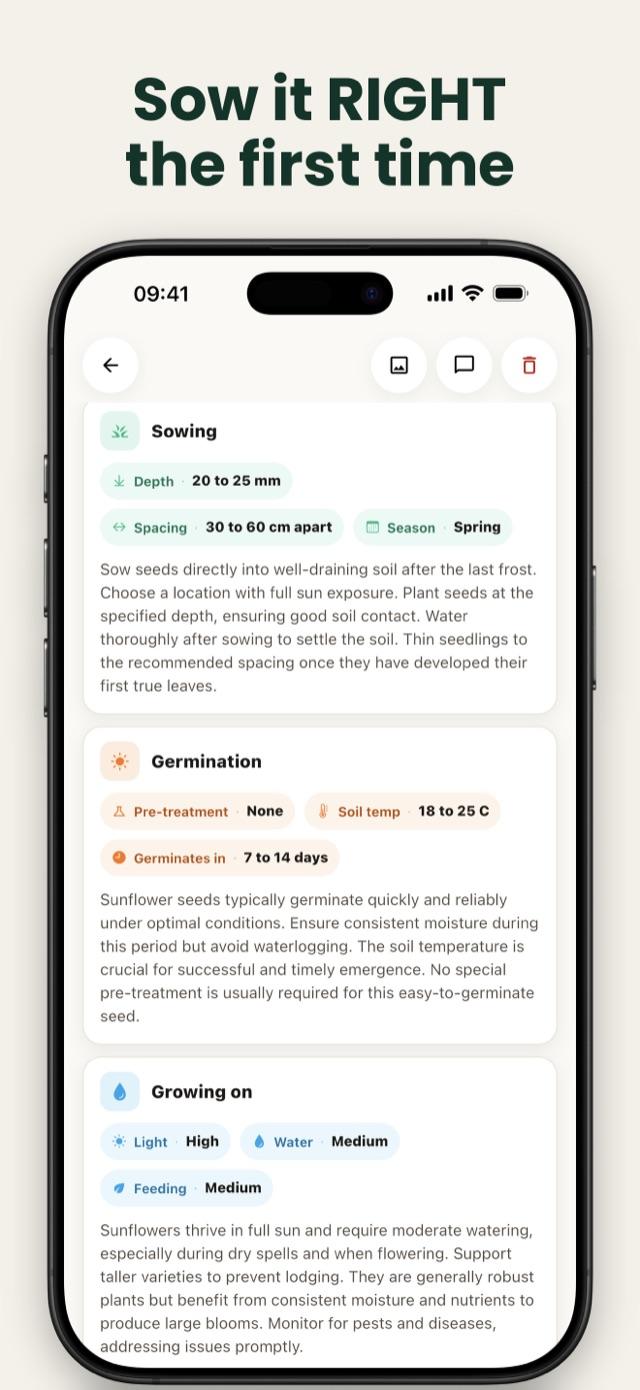
Sow it right
Depth, spacing, ideal season, soil temperature, and any pre-treatment the species needs: soaking, scarifying, or cold stratifying.
- 4
Track it to the sprout
Log the sowing and the tracker counts the days against the expected germination window, so you know when to worry and when to wait.
Guides
Practical answers to the questions Seed Identifier was built for.
How to Identify Seeds by Picture (Mystery Packet? Solved)
Unlabelled packet, saved seeds, or a mystery find: how seed identification from a photo works, the features that matter, and how to photograph seeds right.
Are Old Seeds Still Good? Shelf Life and the 10-Seed Test
Seeds don't die on the packet date. Real shelf lives by species, how storage changes everything, and the paper towel test that gives you the true answer.
How Deep to Plant Seeds: The Rule, the Exceptions, the Fixes
The 2-3x diameter rule, the surface-sowing exceptions that need light, spacing basics, and how to tell when bad depth is why nothing came up.
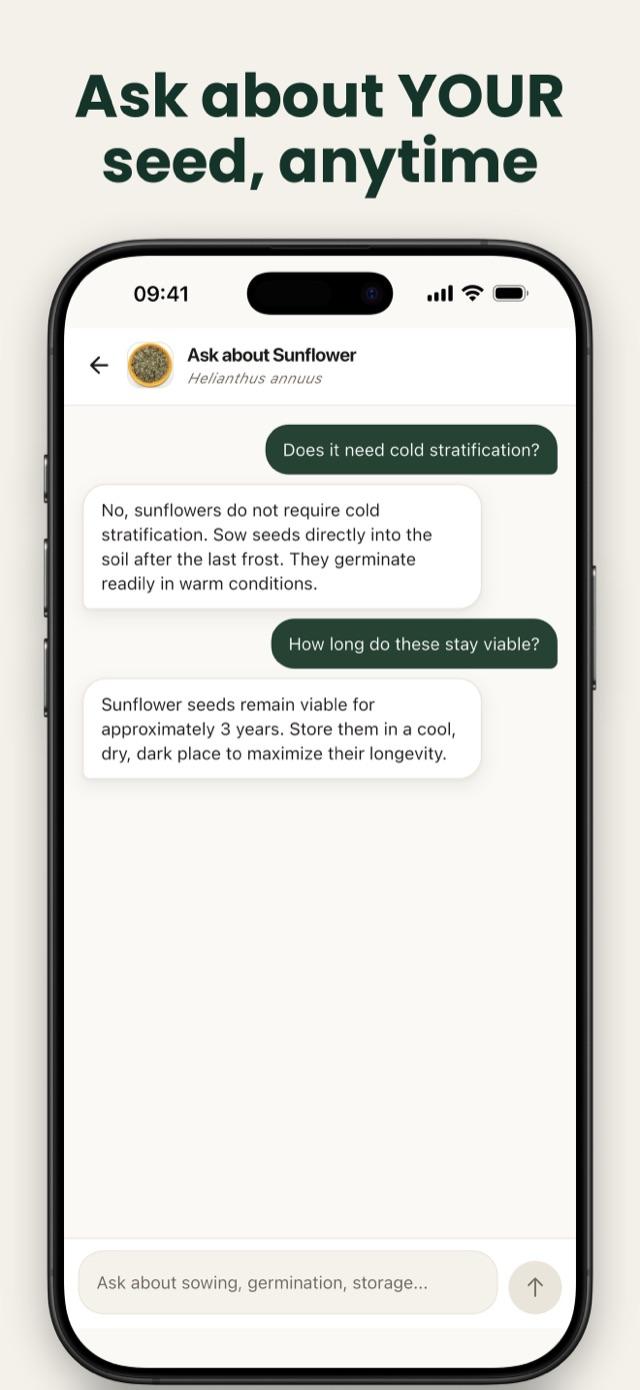
Cold Stratification: Why Some Seeds Refuse to Sprout Without Winter
Milkweed, lavender, echinacea and most natives sit dormant until they feel winter. What stratification is, which seeds need it, and the fridge method.
Best Seed Identifier Apps in 2026 (Honest Comparison)
PictureThis, Seedio, SeedLens and Seed Identifier compared honestly: which tools stop at the species name, which give you a sowing plan, and which fits.
Vegetable Seedlings vs Weeds: How to Tell Them Apart
Seed leaves, row position, and the weed look-alikes that fool everyone: how to tell a crop seedling from a weed before you pull the wrong one.
Frequently asked questions
Can you really identify a seed from a photo?
Often, yes. Seeds carry species signatures in their size, shape, color, and surface texture, and AI trained on seed imagery reads those. Small, similar-looking seeds (brassicas, some grasses) may return a family-level answer with candidates, which honest tools show instead of one fake-confident name.
Learn moreHow do I know if my old seeds are still good?
Most seeds stay viable for 2 to 5 years stored cool and dry, and a 10-seed paper towel test tells you the real germination rate in under two weeks. The full method is in the guide.
Learn moreHow deep should I plant seeds?
The general rule: two to three times the seed's diameter, and some fine seeds need light and go on the surface. Species overrides the rule of thumb, which is exactly what the app tells you per seed.
Learn moreWhy won't my seeds germinate?
The most common causes are cold soil, wrong depth, and dormancy: some species refuse to sprout until they experience winter, real or simulated. Cold stratification in your fridge fixes that last one.
Learn moreIs it safe to plant unknown seeds?
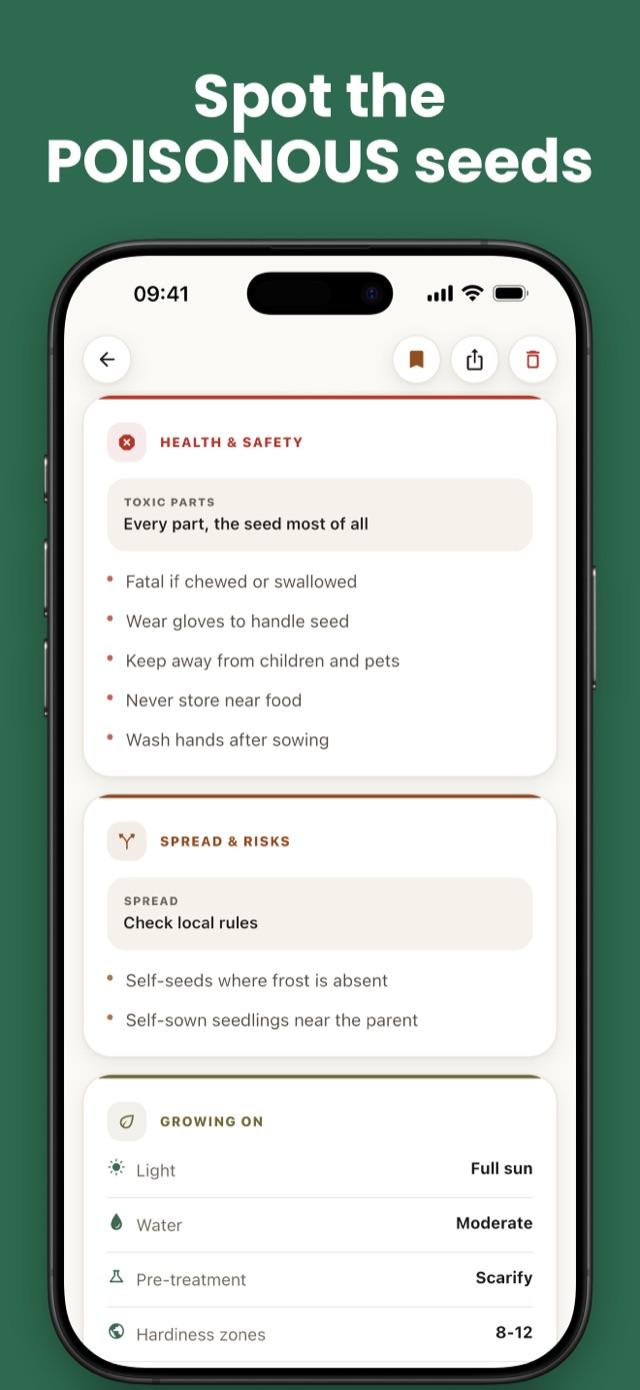
Identify first, plant second. Some seeds are toxic to handle carelessly, and some species are invasive or restricted in your region. The app flags safety warnings per species, and unsolicited seed packets in the mail should be reported, not planted.
Does it track my sowings?
Yes. Log what you sowed and when, and the tracker shows days elapsed against the expected germination window for that species. Everything stays on your device, no account needed.
Get Seed Identifier on your iPhone
Planting depth, germination
Download on the App StoreMore apps by Abouchfa


AI-powered estimates. Never consume or plant seeds based solely on a photo identification: many seeds are toxic, and some species are regionally restricted or invasive.