Copperhead Look-Alikes: 5 Harmless Snakes People Mistake for Copperheads
Updated July 27, 2026 · By Abdeljalil Bouchfar
The copperhead is the most misidentified snake in North America, and harmless snakes pay for it: corn snakes, water snakes, and milk snakes are killed daily by people certain they saw a copperhead.
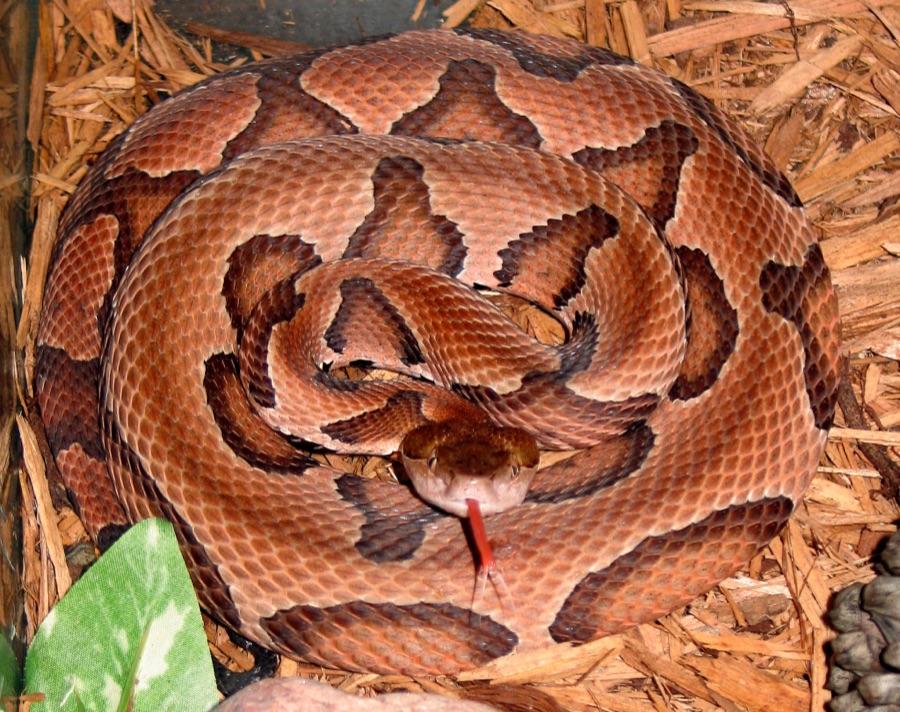
One field mark settles most cases: the copperhead's crossbands are shaped like an hourglass laid on its back, narrow at the spine and wide at the sides. Nearly every look-alike wears the opposite pattern: blotches wide at the spine and narrow at the sides. Learn that single test and you are ahead of most people.
The real copperhead, quickly
A stout, tan-to-copper snake with darker hourglass crossbands, an unmarked coppery head, and a heavy body for its length (60 to 90 cm typical). Juveniles have a sulfur-yellow tail tip. Range: eastern and central US, in woods, rock piles, and leaf litter, where the pattern is genuinely superb camouflage.
The five usual suspects
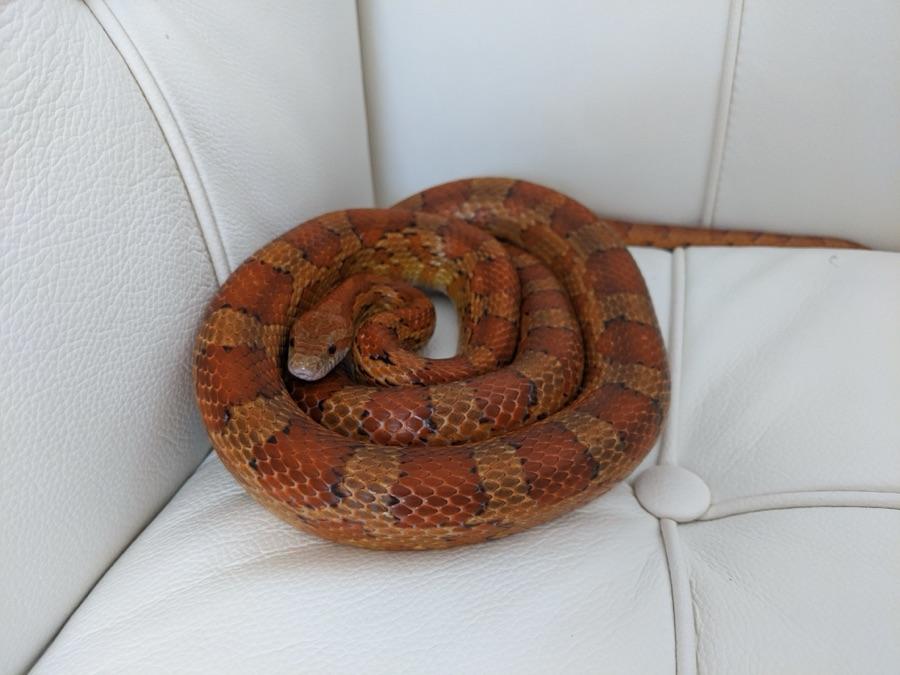
- Corn snake: brighter orange-red blotches (spine-wide, not hourglass), a spear-point mark on the head, slender build
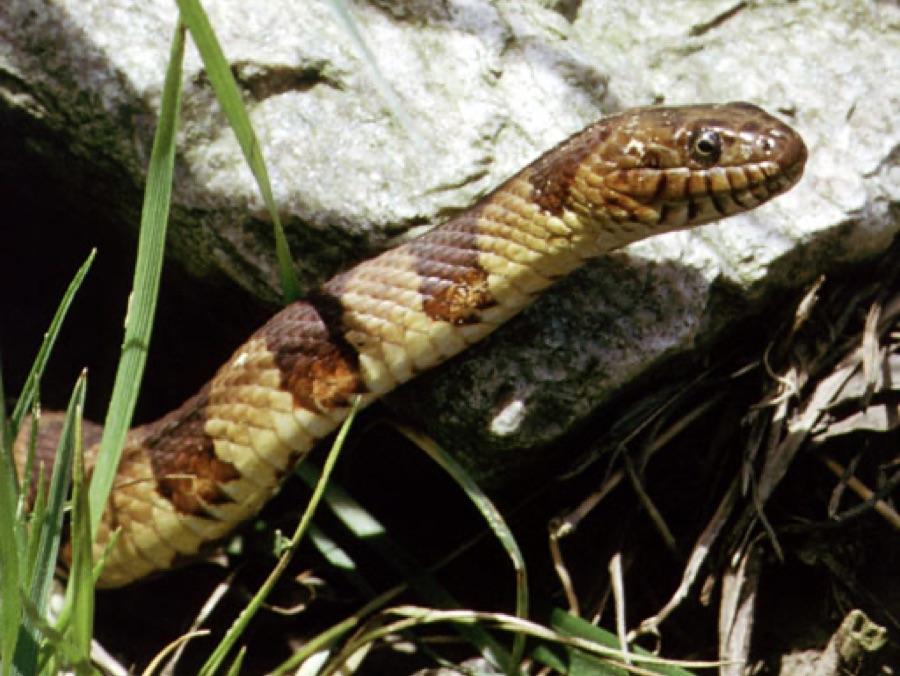
- Northern water snake: dark bands widest at the spine, always near water, rougher matte scales
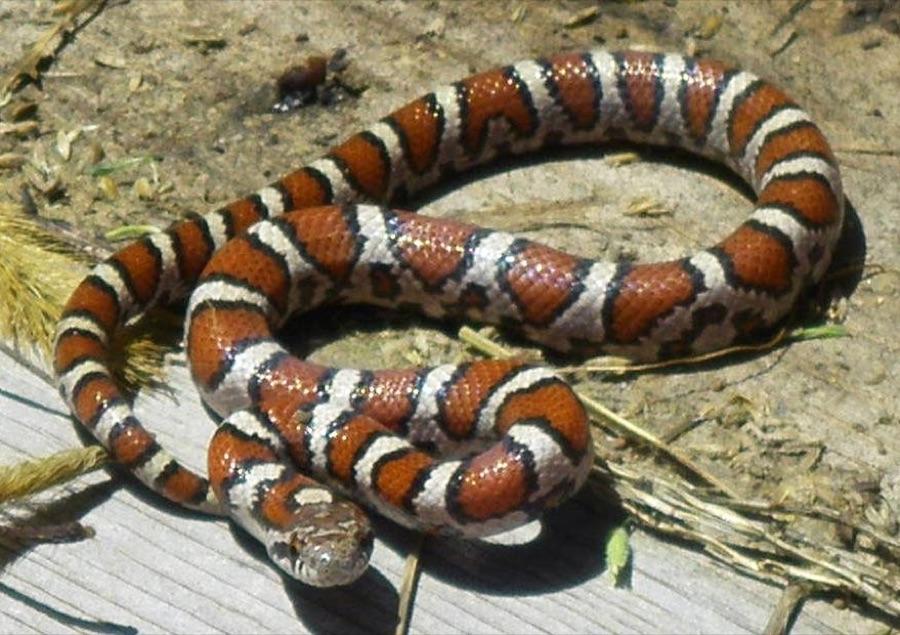
- Eastern milk snake: smaller and glossy, saddle blotches with dark borders, a Y or V mark on the neck
- Juvenile rat snake: gray with dark spine-wide blotches, slender, loses the pattern with age
- Eastern hognose: upturned pig nose, dramatic bluffing (hooding, playing dead), variable blotches that are never hourglasses
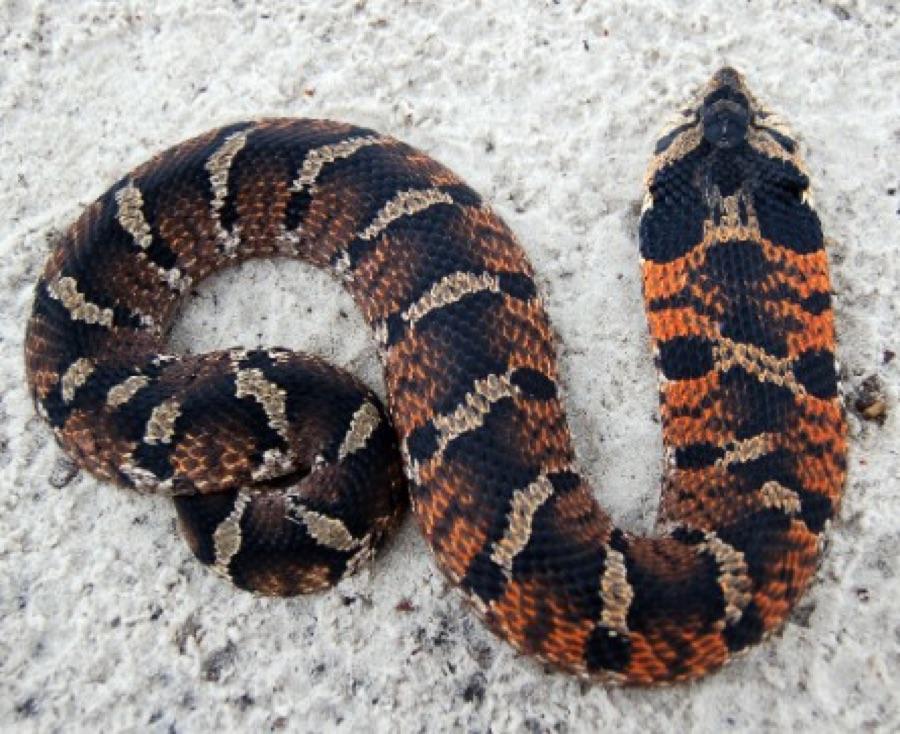
Apply the hourglass test
Look at the snake side-on: copperhead bands are widest low on the sides and pinch to a narrow waist across the spine. From above, the bands look like a row of Hershey's Kisses along each side. If the pattern is widest across the top of the back, it is not a copperhead. That one observation, made from a safe distance, resolves most encounters.
Photo ID beats memory under adrenaline
Field marks are easy to forget while your heart is pounding. A photo from a safe distance plus AI identification compares the pattern for you and returns the species with a danger rating. The look-alike cases are exactly where this matters: the model has seen thousands of copperheads, corn snakes, and water snakes and does not get scared into pattern-blindness.
Either way, the response to a real copperhead is calm too: keep distance, keep pets away, and let it move on or call a relocator. Copperhead bites are rarely fatal but always an emergency-room visit.
Settle it with Snake Identifier
- Photograph the snake from a safe distance, side and top pattern visible.
- Run the scan and read the species and danger rating.
- Compare the result against the hourglass test yourself; two independent checks beat one.
- Save the encounter; repeated sightings tell you whether it is resident or passing through.
Sources
- Venomous Snakes, CDC (NIOSH)
- Snake bites, MedlinePlus, US National Library of Medicine
About the author
Abdeljalil Bouchfar is an independent software engineer and the developer of Snake Identifier: Venom Detect. He is not a veterinarian, doctor, or lawyer, and the sources above are listed so you can check the claims yourself.
Safety note: never approach or handle an unknown snake to photograph it. Identification apps are decision support, not a guarantee. If someone is bitten, call emergency services immediately regardless of what any identification says.