
Spider Identifier: Venom ID · Reference
Spider Identifier: Is It Dangerous? Know in Seconds
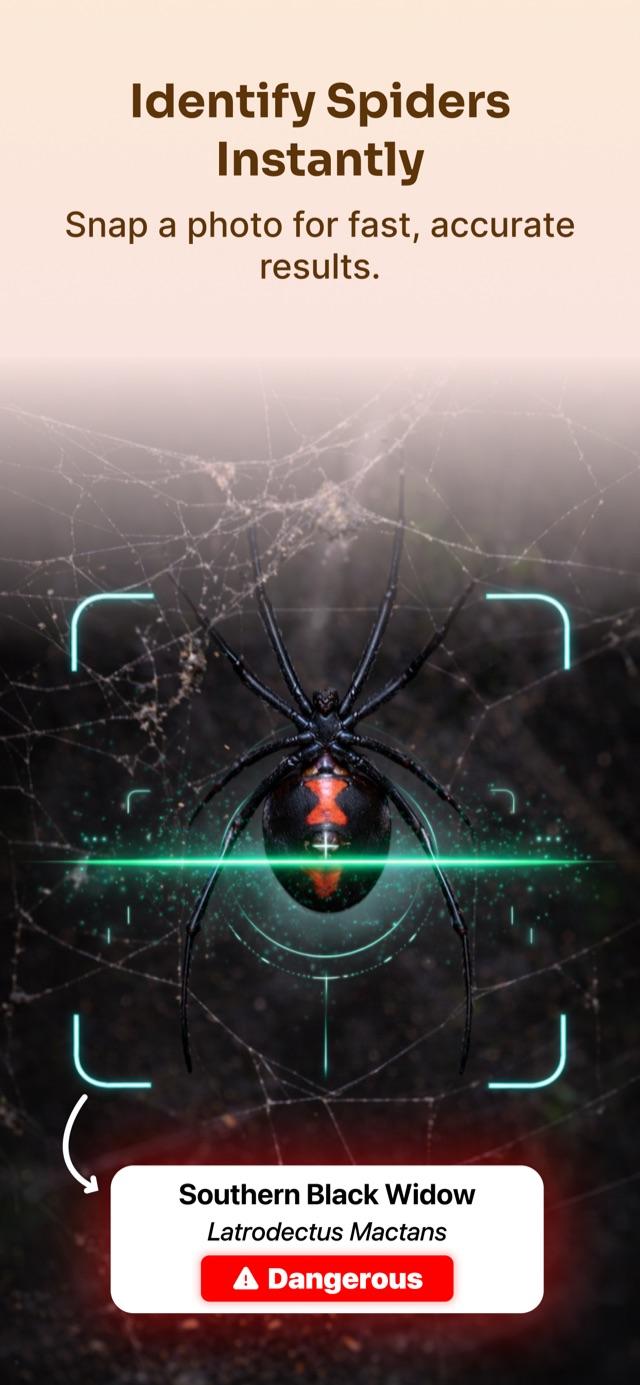
Found a spider and need a straight answer? Snap a photo and get the species, the danger verdict, and what to do next, in plain language instead of a biology lecture.
- Species ID from a photo in seconds
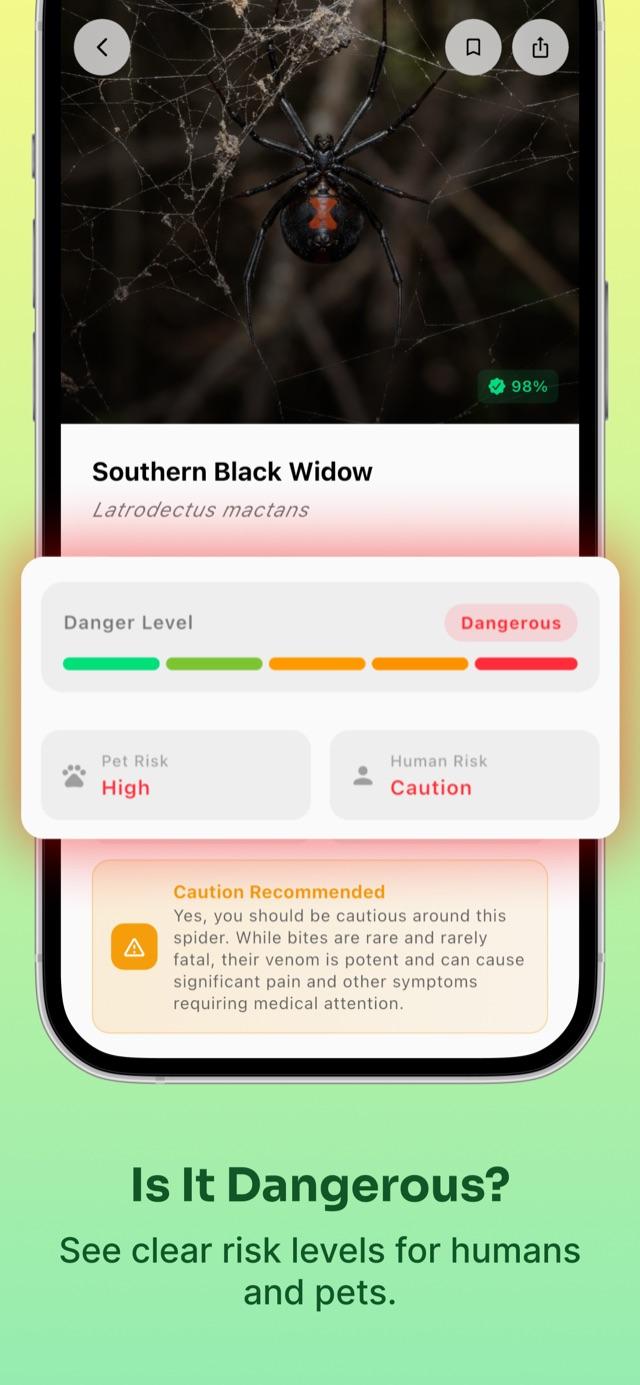
- Plain-language danger verdict: should you worry?
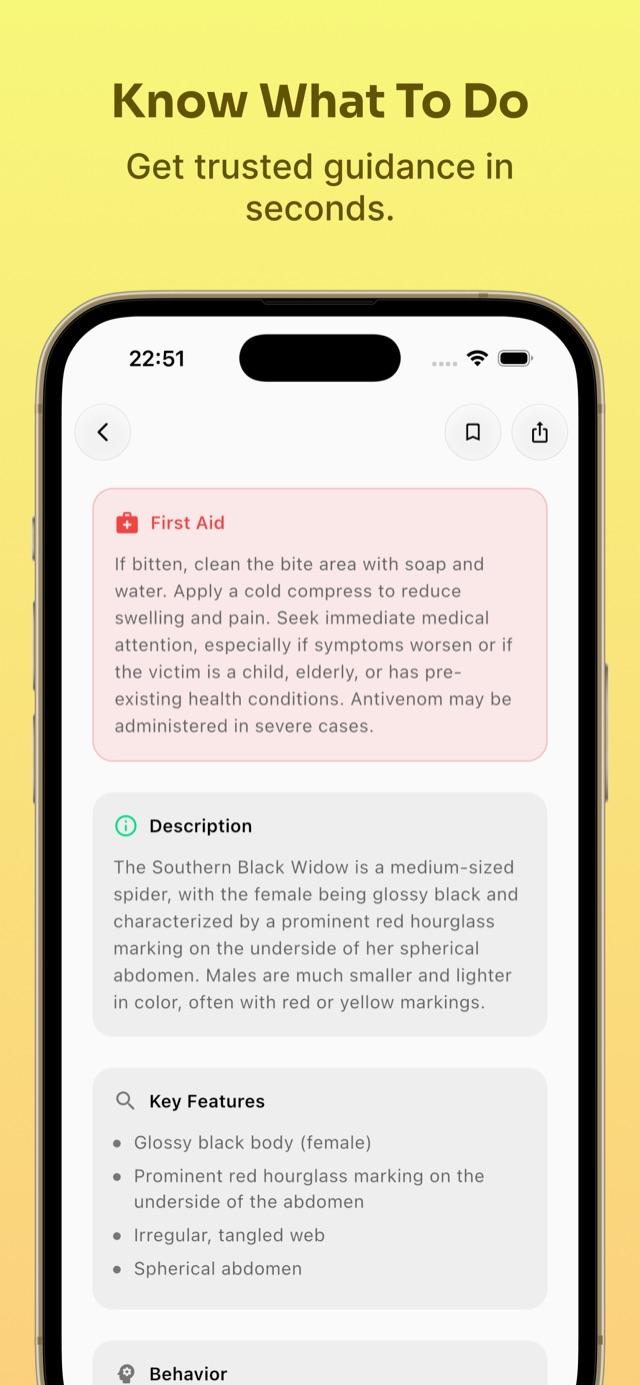
- Bite and first aid facts for you and your pets
Version 1.0.5 · Updated Jul 7, 2026
How it works
- 1
Snap the spider
Photograph it from above if you can; the back pattern is what identifies most spiders. No need to get close.
- 2
Get the species and verdict
The AI names the species and gives a plain answer: harmless, mildly venomous, or medically significant.
- 3
Read the safety facts
Bite risk for humans and pets, plus clear first aid steps, on every species page.
- 4
Build your collection
Every identification is saved to a searchable personal history, and you can browse featured species you are likely to meet.
Guides
Practical answers to the questions Spider Identifier was built for.
Is This Spider Dangerous? The Honest Answer for Worried Finders
In the US only widows and recluses are medically significant. Learn the two-genera rule, the real markers of each, and how to identify any spider fast.
How to Identify a Spider by Photo (Get the Angle Right)
Spider ID lives on the back pattern. Learn the top-down photo technique, lighting tips for tiny subjects, and how AI matches your photo to a species.
Brown Recluse Look-Alikes: How to Tell What You Actually Found
The violin mark is unreliable. Learn the real brown recluse checks: six eyes, plain legs, geographic range, and the harmless spiders that get the blame.
Spider Bite? What to Do (and How to Know It Was Really a Spider)
Most 'spider bites' are not spider bites. Learn basic first aid, the red flags that need a doctor, and why identifying the spider changes everything.
Best Spider Identifier Apps in 2026 (Honest Comparison)
Seek by iNaturalist, Picture Insect, ID websites, and Spider Identifier compared honestly: which gives you the danger verdict, not just a species name.
Wolf Spider vs Brown Recluse: How to Tell Them Apart Fast
One is a harmless hunter, one is medically significant. Size, legs, eyes, speed, and behavior: five checks that separate wolf spiders from brown recluses.
Frequently asked questions
How do I know if a spider is dangerous?
In the US, only two spider groups are medically significant: widows and recluses. Everything else is harmless or at most a mild irritation. Identify the species and you have the answer; a photo scan does it in seconds.
Learn moreCan an app identify a spider from a picture?
Yes. Vision AI reads body shape, leg posture, and the pattern on the back and matches it against known species. A top-down photo in decent light gets the most accurate result.
Learn moreHow do I know if a spider is a brown recluse?
The violin mark alone is unreliable; many harmless spiders have similar markings. Real recluse checks: six eyes in three pairs, uniform-colored legs with no bands or spines, and being inside the recluse's actual geographic range.
Learn moreWhat should I do if I think a spider bit me?
Wash with soap and water, apply a cold pack, and watch it. Most single red bumps are not spider bites at all. Seek medical care for spreading pain, an expanding wound, fever, or any bite you suspect came from a widow or recluse.
Learn moreDoes it work on very small spiders?
Yes, if the photo shows the pattern. Use your camera's zoom or macro mode, get the spider's back in frame, and make sure it is in focus. A sharp small photo beats a blurry close one.
Is identification free?
Yes, identification is free. Pro unlocks the full safety profile: complete danger assessment, pet risk, and first aid guidance for every spider you scan.
Get Spider Identifier on your iPhone
Poisonous? Bite & First Aid
Download on the App StoreMore apps by Abouchfa


Safety note: identification apps are decision support, not a medical opinion. If a bite shows spreading pain, an open wound, or fever, or you suspect a widow or recluse, seek medical care promptly.